


Three weeks after Sophia Basson’s mastectomy, she felt a sharp pain under her right armpit. Over the following months, he experienced painful tremors in his chest and back. Her body had become so sensitive that sometimes she could not wear a shirt or even lift a fork to her mouth.
Basson used to sleep sitting up because it was painful to lie down and she would tremble at the slightest touch.
“I remember thinking I was losing my mind,” said Basson, 43. “One time I was in so much pain I had to take off my top and then my cat’s tail hit my back. I screamed.”
Mastectomies are life-saving surgeries that remove a patient’s breasts to treat breast cancer, which affects 1 in 8 American women Over their lifetime, according to the American Cancer Society. Some women also undergo mastectomy as a preventive measure after genetic testing shows they have an increased risk of breast cancer.
In the months following surgery, many women suffer from Pain syndrome after mastectomyor PMPS, which range from uncomfortable to disabling and can last for years.
Yet PMPS is inconsistently diagnosed and treated, leaving women like Basson suffering as they seek relief and struggle to find doctors who take their pain seriously, according to a KFF Health News review of peer-reviewed research studies and interviews with pain experts, surgeons, patients and patient advocates.
Another problem is that PMPS is poorly defined, which contributes to a wide range of estimates as to how common it is, reaching more than 50% of mastectomy patients, according to studies. Even the low-end estimate, around 10%, would amount to thousands of women.
PMPS care could be improved if lawmakers pass the Advancing Women’s Health Coverage Act, which was introduced in October to ensure insurance coverage after breast cancer treatment, including preventive mastectomy. The bill, which does not name PMPS, covers complications including chronic pain. More research would help, but pain research has long been fragmented medical specialties And, most recently, it has been weakened by the administration of President Donald Trump, who last year proposed deep cuts to research funding at the National Institutes of Health. After Congress rejected those cuts earlier this year, the White House slowed the release of NIH grant money, hindering ongoing and future scientific research.
Kathy Stelligo, one woman, said, “I know women who have had persistent pain – itching, burning, stabbing pain – for years after a mastectomy.” author of many books On breast cancer, he said that he has talked to hundreds of patients. “Of all the problems, this is probably the one that surgeons talk about the least.”
Four mastectomy patients interviewed by KFF Health News told similar stories. In separate interviews, patients said that their pre-surgery consultation did not increase the likelihood of pain syndrome after mastectomy, although each said they had signed forms that might have disclosed the possibility of this complication. All said they felt blinded by chronic pain, and some said their doctors dismissed their symptoms.
“Women don’t know about it, and when they have complications, doctors act like it’s very rare, like they’re very surprised,” Basson said. “But it is statistically predictable.”
Jennifer Drubin Clark, 42, struggled with pain after her mastectomy in 2018 and it got worse after reconstructive breast surgery in 2019.
But it seems her surgeon was only focused on the appearance of her breast implants, he said.
Clark said, “I couldn’t play the piano. I wanted to blow-dry my hair, but I couldn’t hold my hand above my head for more than two seconds. I couldn’t hold my kids.” “Everything made me cry.”
the pain often disappears
Breast cancer survival rates have increased steadily since the 1980s due to improved cancer screening, genetic testing, improved treatments, and an increase in mastectomy surgeries.
According to recent research papers from anesthesiologists at Baylor University in Texas and surgeons in Chicago and New York, post-mastectomy pain syndrome is a result of that success. Both papers called for greater attention to PMPS so that breast cancer patients can not only live longer but live well.
Plastic surgeons Jonathan Banks and Maureen Biederman write, “In the past, when concern was primarily over patient survival, this pain was often considered acceptable.” a paper of 2021Stating that mastectomies and other breast surgeries “should only be considered successful when patients are pain-free.”
There is still a long way to go in treating post-mastectomy pain, said anesthesiologist Sean Mackey, who leads the division of pain medicine at Stanford University. Mackey said this “treatable” condition has no consistent definition for diagnosis, no standardized test, and no treatment approved by the Food and Drug Administration.
Even the name is a misnomer, Mackey said, because the same pain can arise in women who have had other procedures, including lumpectomy and lymph node surgery.
“The condition was historically rejected,” Mackay said. “Basically women were told: ‘You’re lucky to be alive. Expect some pain. Suck it up and deal with it.'”
“This attitude has been slow to change,” he said.
Because there is no clear treatment for PMPS, Basson and others have experimented with alternatives such as nerve stimulation machines. “Doctors act like it’s very rare, like they’re very surprised,” Basson says of PMPS. “But it is statistically predictable.” (Amy Maxman/KFF Health News)

Some people suffering from post-mastectomy pain have found temporary relief from transcutaneous electrical nerve stimulation machines, which can alter or block pain signals in the brain. (Amy Maxman/KFF Health News)
Banks, a New York surgeon who set up a clinic Focusing on the pain after mastectomy, it is believed that this pain is caused by the nerves that are cut during the surgery and then left as is.
The nerves can be stitched back together to reduce pain, Banks said, but most breast surgeons are not trained to do this. So it’s not surprising, he said, that some patients say their surgeons were ignoring their pain after mastectomy.
“When doctors don’t have answers or don’t know the solution, the easiest thing to do is to say there’s no problem,” Banks said.
PMPS has been documented among cancer patients since the 1970s. Although there is no official definition of the condition, many researchers describe it as persistent pain in the chest, shoulder, arm, or side for at least three months after surgery.
Mastectomy aimed at preventing breast cancer has become more common in women at higher risk, including genetic mutations and a family history of the disease.
Basson’s grandmother died of breast cancer when she was 40. After her father died of cancer in 2023, a genetic test revealed that she was at risk. Sad and frightened, Basson sought a preventive mastectomy without hesitation, she said.
Basson said she was also inspired by actress Angelina Jolie, who revealed her own preventive mastectomy in a 2013 column In the New York Times. His description had such a significant impact on genetic testing and rates of preventive mastectomies that medical researchers have conducted studies they call “angelina jolie effect“
“I was really impressed by it,” Basson said. “He made it look quite effortless in a way.”
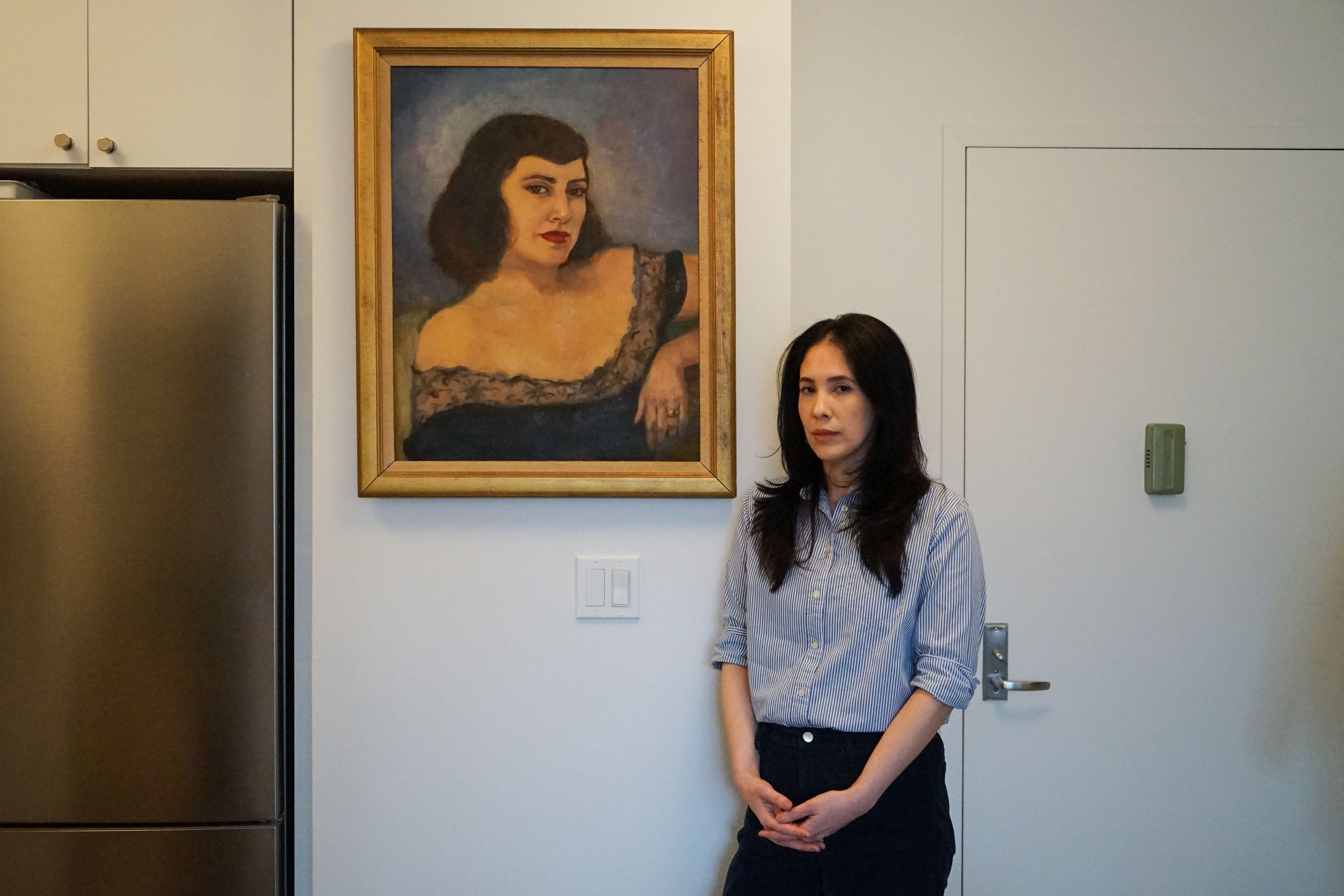
The outcome of Basson’s surgery was worse than he expected. Using a computer for long hours triggered paralyzing pain, so he lost his job and has been out of work for over a year. Prescription pills eased the pain but left him in a fog, he said. Desperate, she consulted several doctors until someone suggested a nerve stimulation machine, which provided momentary relief.
About nine months after the mastectomy, Basson’s pain from breast reconstruction surgery subsided, although she said it still sometimes returns in waves. Even though her surgery was covered by insurance, Basson estimated that her pain cost her more than $200,000 in lost wages and savings.
“I didn’t expect to pay this much for this surgery,” Basson said. “I don’t know if it was worth it.”
Other women have no real choice.
No ‘gold standard’ solution
Jenny Golomb, 48, was diagnosed with stage 2 cancer in both breasts in 2023 and had a double mastectomy as soon as possible.
Doctors covered a boilerplate blurb of possible complications, Golomb said, but she had never heard the term “post-mastectomy pain syndrome” until she had this pain.
Golomb now manages her chronic pain by taking 1,500 milligrams of gabapentin per day, an anti-seizure drug that can also be used to treat nerve pain. Golomb said she expects to take the medication for years. If she misses a dose, her pain comes back with a bang.
“It was the worst pain I’ve ever felt,” Golomb said. “I managed to get one of my kids down to 10 centimeters without medication and it wasn’t that bad. It was excruciating.”
Gabapentin has proven effective in relieving stubborn pain in some mastectomy patients, while others have responded to electrodes implanted in their spinal cords, according to boiler studyPublished in 2024.
But that study also said there is “no current gold standard” for how to treat post-mastectomy pain and there is a lack of high-level evidence for which treatments are effective.
Baylor anesthesiologist Krishna Shah, a co-author of the report, said many patients eventually find an adjuvant treatment, but it often takes “a little trial and error” to identify what works for each.
And sometimes they never find it.
Susan Dishel, 67, said that after a mastectomy for breast cancer and reconstructive surgery in 2017, she struggled for five years with pain as well as a burning sensation in both shoulders, which was identified in her medical records as nerve pain.
Dishel said she had another surgery to replace her breast implants in 2022 to alleviate her shoulder pain, but doctors then warned her that her other pain was unlikely to improve.
Since then, she has tried prescription medications, steroid injections, CBD oil, acupuncture, physical therapy, and chiropractor treatment.
None of it worked, she said, so she stopped trying.
“I haven’t slept through the night since I ate it,” Dishel said. “But that’s OK. It’s not the worst price to pay for not having breast cancer.”
