


Texas Gov. Greg Abbott speaks during a discussion at the Conservative Political Action Conference, or CPAC, on Friday.
Brandon Bell/Getty Images
hide caption
toggle caption
Brandon Bell/Getty Images
Members of the Republican faithful are gathering in Dallas on Saturday for the final day of the Conservative Political Action Conference, or CPAC, the annual event known for high-profile appearances by the most prominent figures in the MAGA movement. And while celebrations of President Trump’s agenda have been front and center, the president himself was missing from the lineup this year.
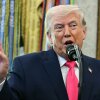
Rather than end the multi-day conference with a rally-type address as in past years, Trump skipped CPAC this year for the first time in a decade.
His absence comes at a tense moment in his second term. Saturday marks one month since the US launched strikes against Iran – a move that has created divisions within the president’s historically loyal base.
Here are some takeaways from the conference so far.
The shadow of war in Iran looms over CPAC
While polling shows a majority of Americans may be against the war, CPAC is still the Trump show.
Jeff Hadley, who drove from Raleigh, N.C., to attend CPAC, argued, “I think a lot of people feel more confident in (Trump) doing this than a lifelong politician who wants to follow his party’s rules.”
While some high-profile conservatives like Tucker Carlson and Megyn Kelly have been vocal critics of the war, Headley’s approach is in line with many Republicans right now. A recent survey by the Pew Research Center found approximately Eight out of 10 Republicans Accept Trump’s way of handling the war.

However, pulling back the curtain, this support diminishes substantially when looking only at young Republicans and conservative-leaning independent candidates — two groups with whom Trump made gains in 2024.
“I feel betrayed because they promised no new wars,” said attendee Joseph Bolick, 30, an Army and Marine Corps veteran from Tyler, Texas. Who has voted for Trump since 2016 and now says he no longer supports him.
He said, “Why aren’t we helping Americans? The economy’s hurting.” “Why can’t we focus on our own people instead of foreign governments?”
One of the few speakers to criticize the war from the stage was former Florida Congressman Matt Gaetz.
Gaetz said, “A ground attack on Iran would make our country poorer and less safe.” “It would mean higher gas prices, higher food prices, and I’m not sure we would kill more terrorists than we would create.”

Former US Representative Matt Gaetz told the CPAC audience that a ground attack on Iran would make the US “poorer and less safe”.
Brandon Bell/Getty Images
hide caption
toggle caption
Brandon Bell/Getty Images
Midterm talks pushed back significantly
CPAC has long been regarded as a destination for conservative voters to network and organize, and for popular voices within the GOP to mobilize their base.
But this year, fewer candidates took it as a campaign stop. Only a few Senate and House candidates spoke at the event.

Among the speakers was former Republican National Committee Chairman Michael Whatley, who was a candidate for Senate in North Carolina. His message? The midterms will be critical in determining the direction of Trump’s remaining time in office, because if Democrats take back the House or the Senate, they will block the GOP agenda.
He said, “We will absolutely ensure that Donald Trump will get a four-year term, not two years.” “We cannot let the left win this election cycle and take away this agenda we are fighting for every day.”
CPAC saw many new faces this year
Several conservative firebrands were missing from the lineup — from top Trump surrogates like Vice President J.D. Vance to MAGA media personalities like Carlson and Kelly. All three have appeared at various CPAC events in recent years.
While there were some familiar faces — including former Trump adviser Steve Bannon — CPAC’s lineup this year focused more on new names in the conservative movement, even if they were less central figures in Trump’s traditional orbit.

Trump-themed merchandise is displayed during CPAC.
Leandro Lozada/AFP via Getty Images
hide caption
toggle caption
Leandro Lozada/AFP via Getty Images
On Thursday, the final speech of the evening went to Nick Shirley, a 23-year-old content creator who went viral for alleging fraud at Minneapolis day-care centers run by Somali immigrants.
Other prominent speaking slots went to conservative activists from around the world, such as former British Prime Minister Liz Straus and Eduardo Bolsonaro, son of former Brazilian President Jair Bolsonaro. Their attendance reflects CPAC’s growing ambitions to take MAGA conservatism abroad.
That said, although the list of speakers looked different, much of the program still revolved around Trump’s key policy priorities, and leaned heavily on culture war issues and concerns about illegal immigration.
MAGA without Trump?
At the beginning of the event on Friday, CPAC Chairman Matt Schlapp led a discussion titled “Can’t We All Just Get Along,” where he argued that conservatives should accept and welcome differences.
“How boring would CPAC be if it was all it was: unity, compromise, vanilla, right?” He said. “We wouldn’t want that.”
“One of the reasons this cooperation and this coalition has held together is because people have embraced Trump and Trumpism,” Schlapp said.
But as 2028 inches closer, Trump’s absence from CPAC this year is a reminder that he may be the only person holding the bulk of the party together, and when he’s not there, it’s unclear who fills that role.
