


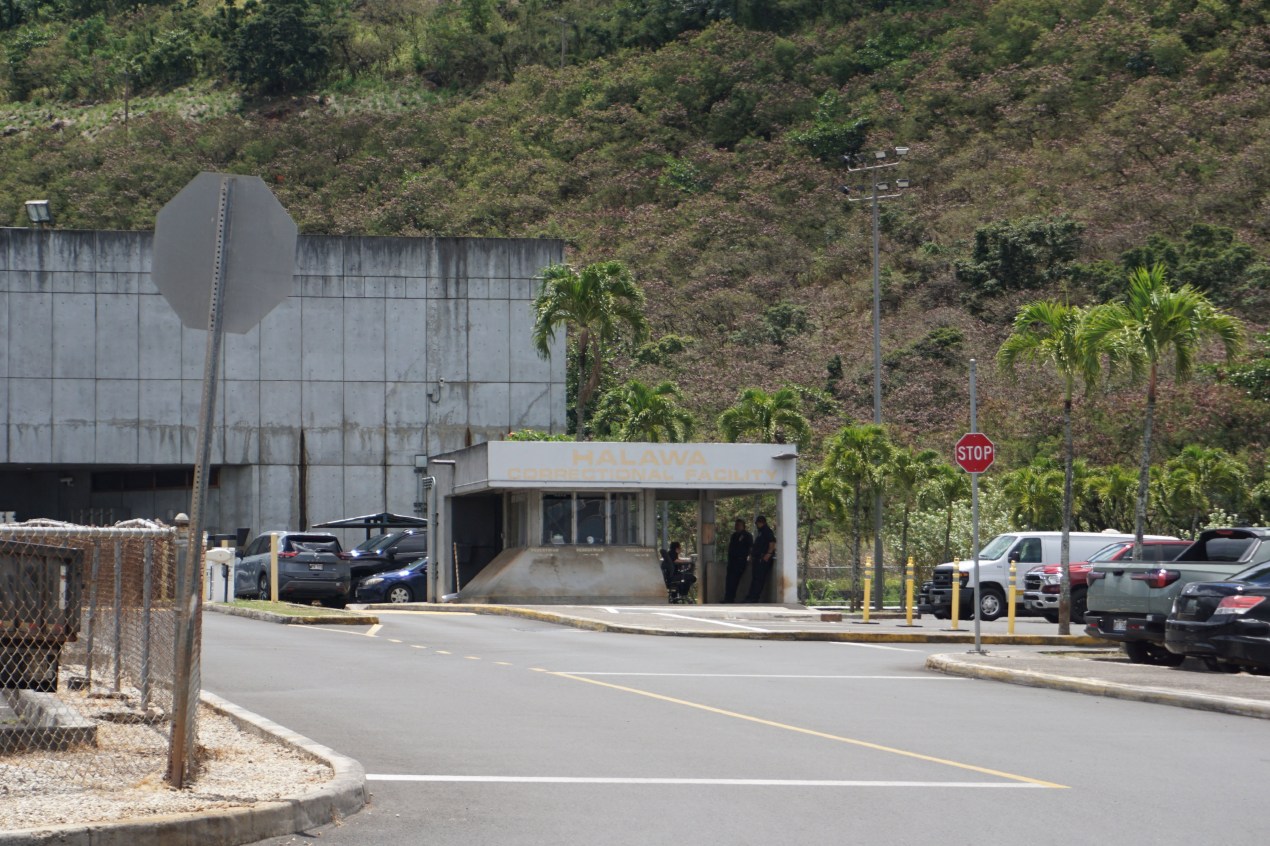
AIEA, Hawaii – Christian Almeida used a cane to push himself out of bed in his cell at Halawa Correctional Facility in Honolulu. He has been recovering in the prison medical hospital since a stroke in January left most of his right side paralyzed.
In February, Hawaii’s parole board granted the now 52-year-old compassionate release, which allows inmates to receive expedited probation. Medical attention for serious conditions.
But without a long-term care facility willing to accept him, Alameda isn’t able to go.
The state parole authority said that as of June, at least three other inmates granted release pending their medical needs were staying in the hospital indefinitely due to long-term care facilities unwilling to accept them, primarily because of their criminal backgrounds.
“This is a challenge across the country,” said Molly Crane, an attorney at FAMM, which advocates for fairness in prison policies.
Every state allows merciful release For prisoners, however, Hawaii is the only country that does not have a specific law, relying on internal policy. Inmates who qualify for compassionate release typically cannot care for themselves or have terminal illnesses and may require an assisted living center, nursing home, or hospice.
But many long-term care facilities across the country refuse to take such inmates, keeping them incarcerated for months — or years — after release.
In Rhode IslandOne study found that rejection in nursing homes increased when they were told a patient was coming from prison. in coloradoDue to denials from long-term care centers, prisoners with extensive medical needs stayed an average of 200 days after being granted parole. and in new yorkParoled prisoners sued the state when they could not be placed in nursing homes.
The One Big Beautiful Bill Act signed by President Donald Trump puts further pressure on long-term care providers’ ability to get people out of incarceration. Prisoners are not eligible for Medicaid, so parole need to apply frequently After he was released. The law enacted last summer reduces the window in which facilities can be reimbursed Retroactively for new Medicaid patients from three months to at least 30 days Before they apply. This means that new Medicaid patients whose applications are not submitted within the short time frame are at risk of not being reimbursed for the benefits.
The Centers for Medicare & Medicaid Services “encourage providers and beneficiaries to prioritize timely application submission to maximize coverage,” said CMS spokesman Timothy Foster.
‘The risk is very high’
Most nursing homes across the country already have waiting lists for new residents, according to one 2024 report By the American Health Care Association and the National Center for Assisted Living. Bob Murs, a former attorney who advocates for compassionate release of prisoners, said those waiting lists are another barrier to inmates getting jobs.
“We tell the nursing homes that the majority of the people we’re talking about can’t hurt anybody,” Merce said.
Some prisoners living in Halawa hospital in June could neither walk nor wear clothes. A man could not remember what his illness was. Another man suffering from brain cancer could not give coherent answers to the questions.
Sean Sanada, CEO of the Oahu region of Hawaii Health Systems Corp., oversees the region’s two state-funded long-term care facilities, Lehi Hospital and Maluhia. Sanada said the health system has reviewed dozens of compassionate release referrals but has never accepted any of them.
Sanada said the facilities do not discriminate based on where a resident comes from. Their main concerns, he said, were the safety of their staff and the lack of resources to provide adequate patient care.
“The risk is very high in most of those cases,” Sanada said.
Violent incidents in long-term care facilities have been well documented. A 2024 study An observation of 14 assisted living facilities found that in just one month, 15% of residents experienced resident-to-resident aggression.
When long-term care facilities refuse to accept inmates who have been granted compassionate release, it leaves state taxpayers with a huge bill. According to FAMM, the annual cost of housing a person in Hawaii with complex needs is eight times higher than the average $112,505 average of housing a person in prison. In comparison, the average Medicaid reimbursement for a long-term care patient in a Hawaii Health Systems Corp. facility is approximately $135,000 per year.
According to FAMM, four states – Connecticut, Georgia, Massachusetts and Vermont – contract with nursing facilities to take inmates on compassionate release.
MissionCare Health of the iCare Health Network, which operates nursing homes for people coming out of prison, won contracts in three of those states. David Skoczulek, iCare’s vice president of business development and communications, estimated that its rates are $100 to $350 per day higher per patient than average nursing home rates in the states where they operate.
In Hawaii, the Department of Corrections sets recommendations to send to the Parole Board, which decides whether to grant release. Prisoners who are granted early probation may be released to family members who commit to caring for them or to a long-term care facility.
Cory Reinke, head of the Hawaii Paroling Authority, said that in his 24-year career he does not recall placing anyone in a long-term care facility without family intervention, for example by contacting the facilities themselves.
“Parolees need to find a facility that can meet their medical needs and is also willing to take them,” Reinke said. “That’s where we’re facing obstacles.”
In search of a parole, Reinke called more than 100 care homes, he said, but all of them refused to accept the patient because of safety concerns. According to a 2024 state report, while Hawaii’s long-term care facilities are used 80% of their bed capacity, Even those levels become difficult to maintain due to workforce stress.
Hawaiian Prisoners’ Asylum: Family
Last year, Paul Kupihia, 69, died in a hospital five days after the state granted his family compassionate release. He died before he could fly to his home island.
In July 2025, Lahela Kruse, the mother of Kupihia’s child, received a call from a Honolulu hospital that his condition had become critical. By then he had been diagnosed with an incurable form of cancer and was in and out of hospital even while in custody.
Krause and his daughter went to Oahu to see him and were shocked when they saw how sick he was. His daughter agreed to move him into her home in Hilo on the island of Hawaii, despite having no relationship with him for most of his life.
“She knew she was sick,” Kruse said. “I told her it, but she didn’t know the seriousness of it. I really didn’t.”
His daughter’s desire to take him prompted his merciful release. But Cruz said information about Kupihia’s illness came too late.
FAMM’s Crane is working on expanding compassionate release laws in states to make more prisoners eligible and strengthen transparency in the process. Hawaii lawmakers have tried to pass bills on compassionate release for years, but none have succeeded.
Without a law that outlines a formal process and who is eligible, even family support is not enough, Crane said. Inmates could still face life-threatening delays, he said.
“The absence of compassionate release laws means that people who need compassionate release die in prison,” Crane said.

In Almeida’s cell, two beds stood about 3 feet apart, there was a seatless metal toilet in the corner and a window looked out onto a concrete wall. The smell of bleach spread through the room. Almeida said he hoped to meet his daughter soon. She recently turned 5 years old.
“I made some mistakes in my life,” said Almeida, who is being held in prison through 2024 on charges of drug possession, driving a stolen vehicle and skipping bail. “I tried when my daughter was born, but I know I’ll change because she needs me from here.”
Merce, a former lawyer, is still trying to find a place for Almeida, who has not committed any violent crimes. Merce became aware of the struggles of prisoners through his work as a trial lawyer. He said he has helped about 15 inmates leave Hawaii Correctional Facilities for medical treatment.
He said he has seen cases where people had to wait for years to get out.
“However, the people who stick with me,” Meurs said, “are the ones I never got a placement for.”
